ACL Tear Rehab: How Physiotherapy Helps You Recover and Return Stronger
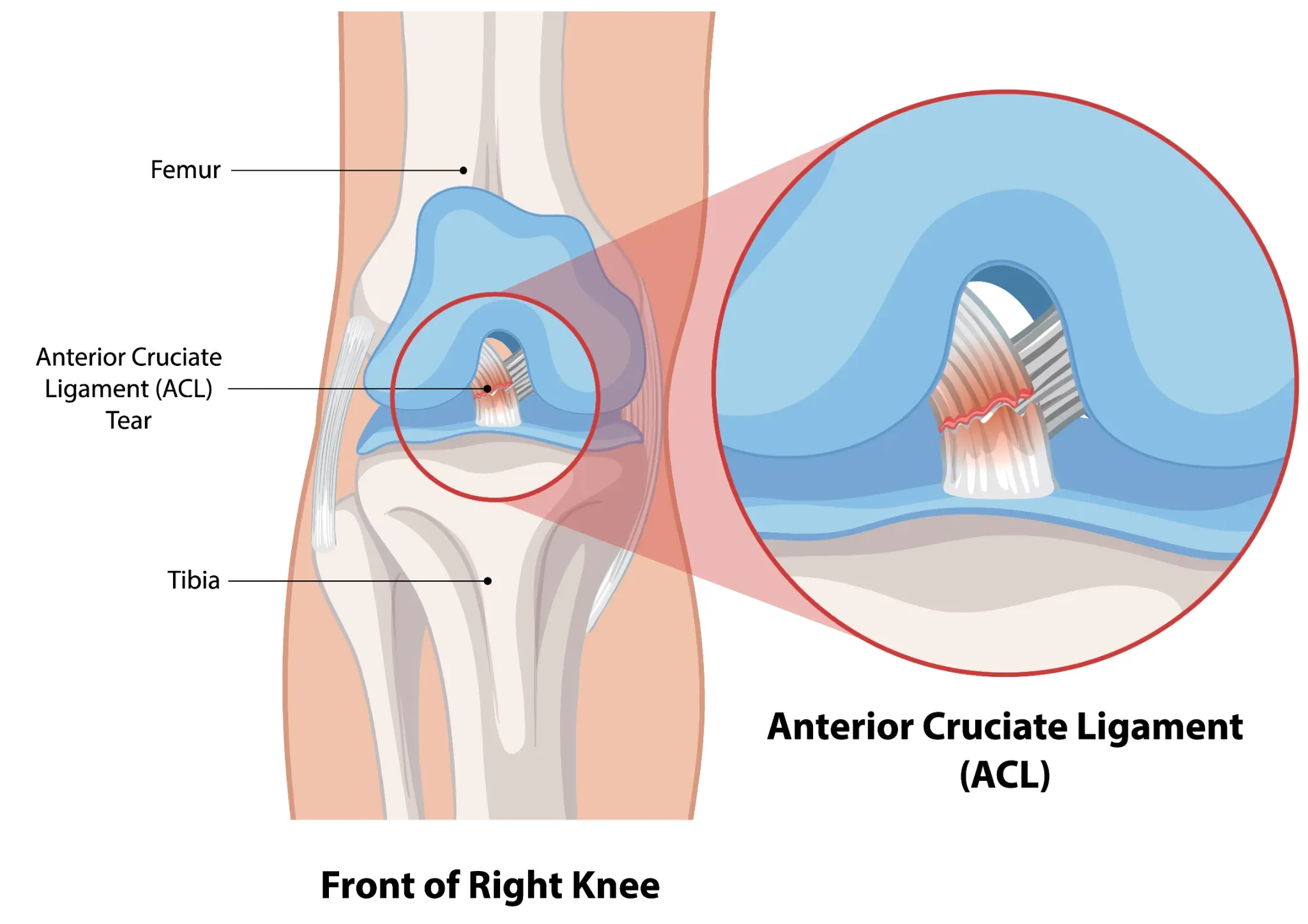
The anterior cruciate ligament (ACL) is one of the main ligaments that stabilizes your knee — especially during movements like turning, jumping, or sudden stops. When torn, the knee often feels unstable or “gives way,” making sports or even daily tasks difficult. An ACL tear injury usually happens from twisting, sudden direction changes, or direct impact. It’s one of the most common sports injuries among athletes and active individuals.
Depending on the severity, ACL tear rehab can be either surgical or non-surgical — but in both cases, physiotherapy for ACL injury plays the most vital role in restoring strength and confidence.
Understanding ACL Injuries
An ACL tear can range from a mild sprain to a complete rupture:
- Partial tear: Some ligament fibers are torn, but knee stability is preserved.
- Complete tear: The ligament is fully torn, leading to joint instability.
- Associated injuries: Meniscal or cartilage damage often occurs along with ACL tears.
Diagnosis and Assessment
Accurate diagnosis is essential before starting ACL tear rehab. It helps determine the best treatment path — conservative or surgical.
Diagnosis usually includes:
- Clinical tests like the Lachman and Anterior Drawer tests to assess ligament laxity.
- MRI scan to confirm the extent of ACL damage and detect associated injuries.
- X-rays to rule out fractures, especially after contact injuries.
- Physiotherapist assessment to evaluate joint control, muscle balance, and walking mechanics.
Conservative (Non-Surgical) ACL Tear Rehab
Not all ACL injuries require surgery. In fact, research shows that 40–60% of partial ACL tears and even some complete tears in non-athletes recover successfully with structured physiotherapy for ACL injury.
This conservative approach focuses on retraining muscles and improving joint control to restore confidence and function without surgery.
Who Benefits Most
- Individuals with partial ACL tears or mild instability
- Older adults or people with low physical demands
- Those wishing to avoid surgery but committed to rehabilitation
Key Components of Non-Surgical Management
1. Pain & Swelling Control
- Use of PEACE & LOVE protocol (Protect, Elevate, Avoid anti-inflammatories early, Compress, Educate; Load, Optimism, Vascularization, Exercise).
- Cold therapy (ice) for inflammation in the first few days.
- Compression wraps or knee braces to support stability and reduce swelling.
2. Early Mobility & Range of Motion
Prolonged rest delays healing — guided mobility is essential.
- Gentle knee bends and extensions to prevent stiffness.
- Patellar mobility exercises to maintain kneecap flexibility and tracking.
3. Muscle Activation & Strengthening
Early muscle activation supports stability.
- Quadriceps sets, straight leg raises, and hamstring curls.
- Hip and glute strengthening (bridges, clamshells) for better alignment.
- Gradual resistance using bands or weights under supervision.
4. Balance & Proprioception Training
The ACL has nerve fibers that guide movement awareness, so retraining this system is vital.
- Single-leg standing, wobble board, and mini-squat exercises enhance coordination.
- These build neuromuscular control and reduce future injury risk.
5. Functional & Return-to-Life Phase
As strength returns, functional exercises are introduced:
- Walking, stair climbing, and light jogging.
- Controlled agility drills for safe return to activity.
- Education on posture, lifting techniques, and long-term knee care.
Most patients return to pain-free normal life within 8–12 weeks of structured physiotherapy for ACL injury.
Surgical Management and Post-Surgery ACL Rehabilitation
When the ligament is completely torn or the knee continues to “give way” despite strong muscles, surgery may be needed — particularly for athletes, young adults, or active professionals.
When ACL Reconstruction Is Recommended
- Complete ligament rupture with severe instability
- Repeated knee buckling during walking or sports
- Associated meniscus or cartilage damage
- Intention to return to high-impact activities
During surgery, the torn ligament is replaced using a tendon graft (usually from your hamstring or patellar tendon). This new graft acts as a ligament and integrates into bone over several months.
Post-Surgery ACL Rehabilitation: Step-by-Step Plan
Physiotherapy begins almost immediately after surgery and forms the foundation of your recovery. Each stage of post-surgery ACL rehabilitation exercises for return to sport is designed to progress safely and systematically.
⚠️ Note: Treatment and progression vary from person to person depending on graft type, healing response, and physical condition. Exercises should always be performed under the supervision of a qualified physiotherapist.
Phase 1: Protection & Early Recovery (Weeks 0–2)
Goals: Reduce pain and swelling, protect the graft, restore gentle movement.
You’ll do:
- Ice and compression to control inflammation.
- Gentle knee bends and quadriceps activation exercises.
- Walk with crutches while gradually increasing weight-bearing as advised.
- Keep the leg straight when resting to avoid stiffness.
💡 Research Insight: Early controlled motion promotes better long-term mobility and prevents scar tissue buildup.
Phase 2: Strength & Motion Restoration (Weeks 2–6)
Goals: Regain movement and begin muscle strengthening.
You’ll do:
- Knee bending, extension, and flexibility exercises.
- Closed-chain strengthening (mini-squats, step-ups, bridges).
- Core and hip strengthening for better limb control.
- Gentle balance and cycling under guidance.
💡 Physio Tip: Strong hips and core muscles protect your knee and reduce ACL strain.
Phase 3: Advanced Strength & Balance (Weeks 6–12)
Goals: Improve coordination, balance, and joint stability.
You’ll do:
- Lunges, leg presses, resistance band work.
- Balance board and single-leg exercises.
- Low-impact cardio (elliptical, treadmill walking).
- Controlled agility and directional movement drills.
💡 Evidence Note: Studies show neuromuscular training can reduce re-injury risk by up to 50%.
Phase 4: Functional & Return-to-Sport Training (Months 3–6+)
Goals: Prepare for sports and high-level activity.
You’ll do:
- Plyometric (jump) and agility drills to restore sport movements.
- Sprinting, cutting, and directional changes under supervision.
- Functional testing before full clearance to play.
🏃 Typical Return Timelines:
- Light jogging: 3 months
- Non-contact drills: 4–5 months
- Full sport participation: 6–9 months
The Role of Physiotherapy in ACL Recovery
Whether you choose conservative or surgical care, physiotherapy for ACL injury is your foundation for recovery.
Your physiotherapist ensures:
- Safe progression through rehab stages.
- Restoration of joint stability and movement control.
- Prevention of compensatory habits that could cause re-injury.
- Education on posture, strength, and sports mechanics.
Advanced methods such as Neuromuscular Electrical Stimulation (NMES), manual therapy, and shockwave therapy enhance recovery speed and muscle activation.
References
- Sokal PA, Norris R, Maddox TW, Oldershaw RA. The diagnostic accuracy of clinical tests for anterior cruciate ligament tears are comparable but the Lachman test has been previously overestimated: a systematic review and meta‐analysis. Knee Surgery, Sports Traumatology, Arthroscopy. 2022 Oct;30(10):3287-303. Read more.
- Frobell RB, Roos HP, Roos EM, Roemer FW, Ranstam J, Lohmander LS. Treatment for acute anterior cruciate ligament tear: five year outcome of randomised trial. British journal of sports medicine. 2015 May 1;49(10):700-. Read more
- Filbay SR, Dowsett M, Jomaa MC, Rooney J, Sabharwal R, Lucas P, Van Den Heever A, Kazaglis J, Merlino J, Moran M, Allwright M. Healing of acute anterior cruciate ligament rupture on MRI and outcomes following non-surgical management with the Cross Bracing Protocol. British journal of sports medicine. 2023 Dec 1;57(23):1490-7. Read more
- Adams D, Logerstedt D, Hunter-Giordano A, Axe MJ, Snyder-Mackler L. Current concepts for anterior cruciate ligament reconstruction: a criterion-based rehabilitation progression. journal of orthopaedic & sports physical therapy. 2012 Jul;42(7):601-14. Read more
- Eitzen I, Moksnes H, Snyder-Mackler L, Risberg MA. A progressive 5-week exercise therapy program leads to significant improvement in knee function early after anterior cruciate ligament injury. journal of orthopaedic & sports physical therapy. 2010 Nov;40(11):705-21. Read more
- Grindem H, Snyder-Mackler L, Moksnes H, Engebretsen L, Risberg MA. Simple decision rules can reduce reinjury risk by 84% after ACL reconstruction: the Delaware-Oslo ACL cohort study. British journal of sports medicine. 2016 Jul 1;50(13):804-8. Read more
FAQs
What’s the best sleeping position?
Sleep on your back with a pillow under the injured knee. This helps support the knee and reduce strain. Avoid lying on your side with the injured knee down.
Can I ride a two-wheeler?
No. Sudden movements and vibrations can stress your knee. Instead, choose a more stable mode of transportation.
Can I travel by car?
Yes. Make sure to adjust your seat and support your knee with cushions.
Can I lift weights?
Avoid heavy weights. Focus on upper body and core exercises that do not strain your knee.
Should I use a knee brace?
Yes. A brace provides support. Consult your physiotherapist to choose the right type.
Is walking safe?
Yes. Walking helps maintain joint mobility and strengthen muscles. Start with short distances and gradually increase.
What exercises should I do?
Begin with gentle range-of-motion and strengthening exercises prescribed by your physiotherapist. Avoid high-impact or pivoting movements.
Can I play sports like soccer or basketball?
No. Avoid contact sports and sudden direction changes to prevent further injury.